
Which Cows Are A2 or A1? Are All Desi Cows A2?
In recent years, A2 ghee has gained a lot of attention—but with it has come confusion.
Customers often ask:
- What is A2 ghee vs A1 ghee?
- Which cows produce A2 milk?
- Are all desi cows A2?
Let’s explain everything simply, honestly, and clearly.
🟠 What Is A1 and A2 in Milk and Ghee?
The difference between A1 and A2 ghee comes from the type of beta-casein protein present in the milk used to make the ghee.
🧬 Beta-Casein Protein
Cow milk contains beta-casein protein, which exists mainly in two forms:
- A1 beta-casein
- A2 beta-casein
Ghee made from milk containing only A2 protein is called A2 ghee.
Ghee made from milk containing A1 or a mix of A1 + A2 is commonly called A1 ghee or regular cow ghee.
🟢 What Is A2 Ghee?
A2 ghee is made from milk of cows that naturally produce only A2 beta-casein protein.
Key characteristics of A2 ghee:
- Traditionally easier to digest
- Rich aroma and grainy texture
- Made from specific indigenous Indian cow breeds
- Prepared using traditional methods like Bilona
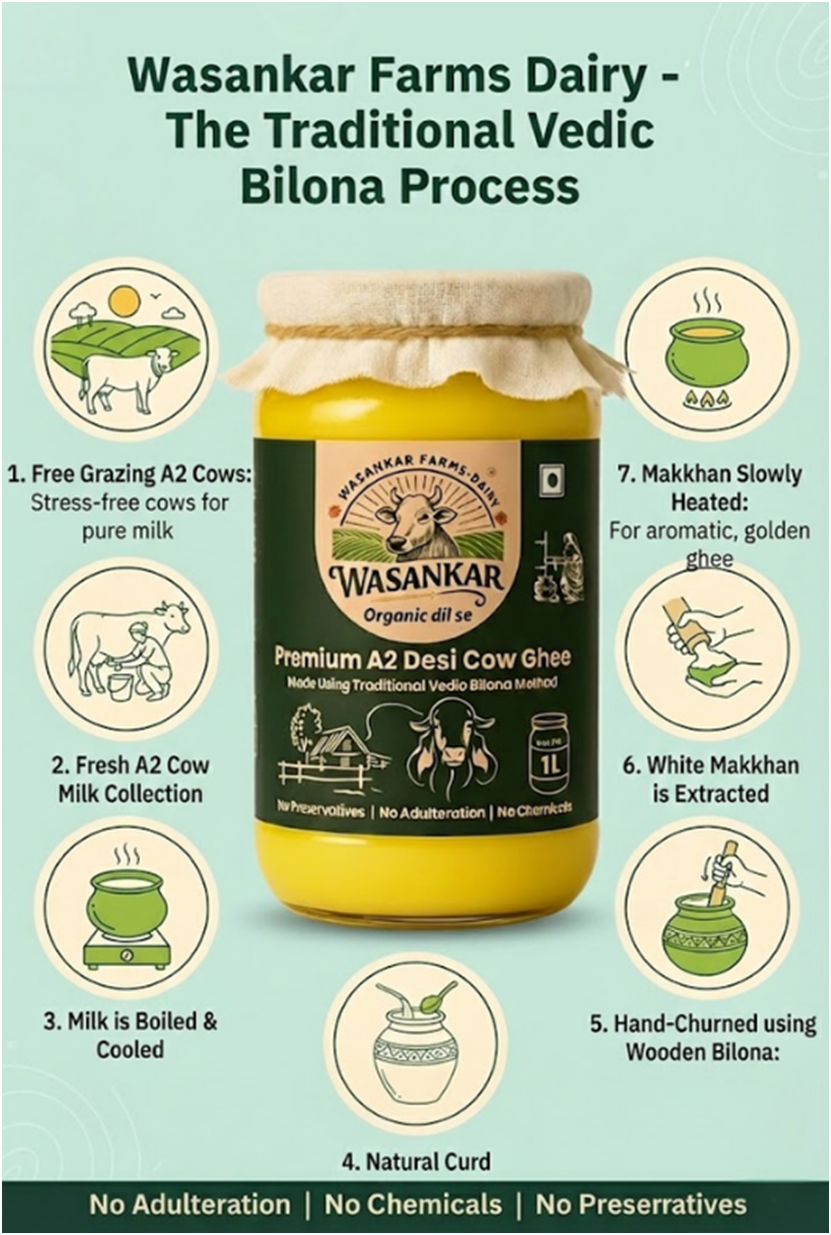
At Wasankar Farms, A2 ghee is made using the Bilona method, where curd is hand-churned and butter is slowly heated—preserving nutrition and aroma.
🔴 What Is A1 Ghee?
A1 ghee is made from milk that contains:
- A1 protein
- Or a mix of A1 + A2 proteins
This milk usually comes from foreign or crossbred cows introduced for higher milk yield.
Common A1 or mixed-protein cows:
- Holstein Friesian (HF)
- Jersey
- Crossbred cows (HF × desi)
A1 ghee is widely available and commonly used, but it is not the same as pure A2 ghee.
🟡 Are All Desi Cows A2?
❌ No. Not all desi cows are A2 cows.
This is the biggest misconception.
All A2 cows are desi cows, but not all desi cows are A2 cows.
🟢 Which Desi Cow Breeds Are A2?
The following pure indigenous Indian breeds are known to naturally produce A2 milk:
✔ A2 Cow Breeds:
- Gir
- Sahiwal
- Tharparkar
- Rathi
- Red Sindhi
- Kankrej
- Deoni
- Ongole (Nellore)
Milk from these breeds is used to make authentic A2 ghee.
🔴 Which Desi Cow Breeds Are NOT A2?
Some Indian native (desi) breeds produce A1 or mixed A1 + A2 milk, depending on genetics and purity.
❌ Non-A2 or Mixed Desi Breeds:
- Hariana
- Amritmahal
- Khillari
- Kangayam
- Bargur
- Dangi
- Kosali / local village cows
These cows are desi, but their milk is not guaranteed pure A2.
🧈 A2 Ghee vs A1 Ghee – Simple Comparison
| Feature | A2 Ghee | A1 Ghee |
| Protein Type | Only A2 | A1 or A1 + A2 |
| Cow Breeds | Pure indigenous Indian breeds | Foreign or crossbred cows |
| Digestibility | Traditionally easier | May be heavier for some |
| Aroma & Texture | Rich, grainy | Mild, smooth |
| Production | Low yield, traditional | High yield, industrial |
| Price | Higher | Lower |
🟤 Why Is A2 Ghee More Expensive?
A2 ghee costs more because:
- 25–27 litres of A2 milk → 1 litre of ghee
- A2 cows produce less milk
- Bilona process requires time, labour, and skill
- Strict breed purity and ethical cow care
This makes A2 gheepremium but nutritionally superior.
⭐ Final Takeaway
- A1 vs A2 is about protein, not marketing
- Not all desi cows are A2
- Only specific indigenous breeds produce pure A2 milk
- A2 ghee made using the Bilona method is how traditional Indian gheeused to be.
At Wasankar Farms, we believe in clarity, purity, and transparency—so customers know exactly what they’re consuming.